8 months ago
3 minutes Read
Nalanda – Where Debate Became a Method of Learning Period and Historical Background
Period and Historical Background
Nalanda flourished approximately between 5th century CE – 12th century CE in present-day Bihar, India. Established during the Gupta period and supported by later rulers, it became one of the largest residential universities of the ancient world. For nearly 700 years, students travelled from different regions of Asia — including China, Korea, Tibet and Southeast Asia — to study here. Kings are described to have granted the revenue of nearly 200 villages for maintaining the institution, allowing education and residence to remain free for students.
A Campus Built for Learning
Nalanda was not a single building but a large organized campus containing:
-
monasteries (student residences)
-
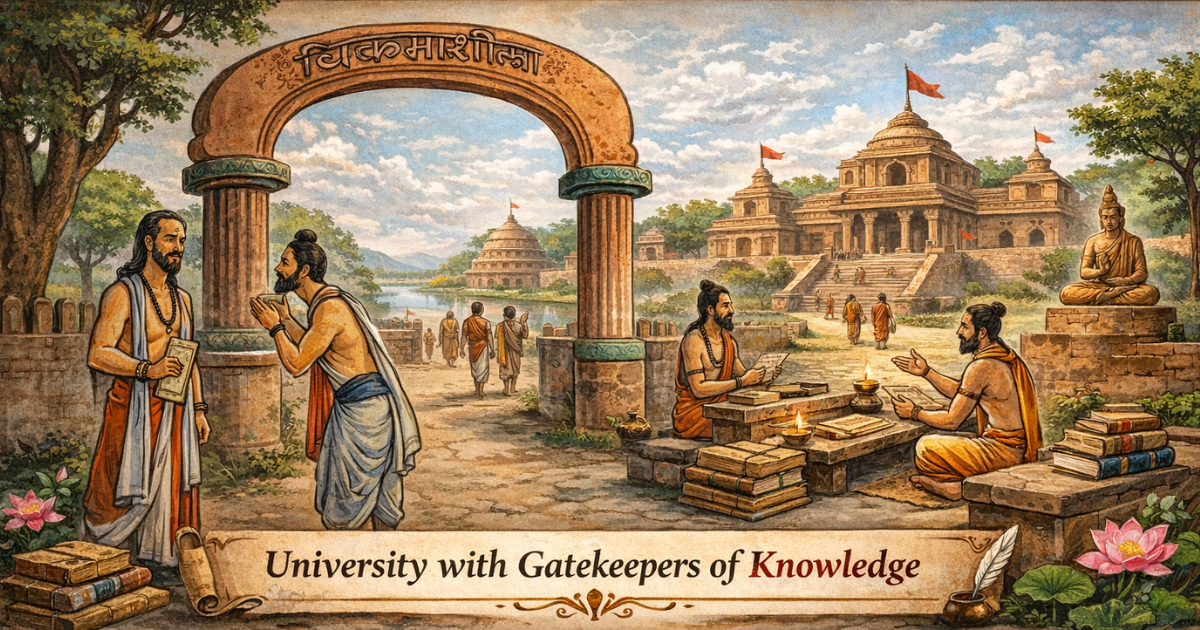
multistoried lecture halls
-
meditation spaces
-
gardens and study courtyards
Thousands of students lived and studied together in a structured environment guided by teachers.
Method of Teaching
Nalanda followed a systematic and advanced learning approach. Three primary methods were practiced:
1. Guided Self-Study
Students studied texts independently and consulted teachers for clarification and deeper understanding.
2. Formal Lectures
Teachers delivered structured explanations on specialized subjects.
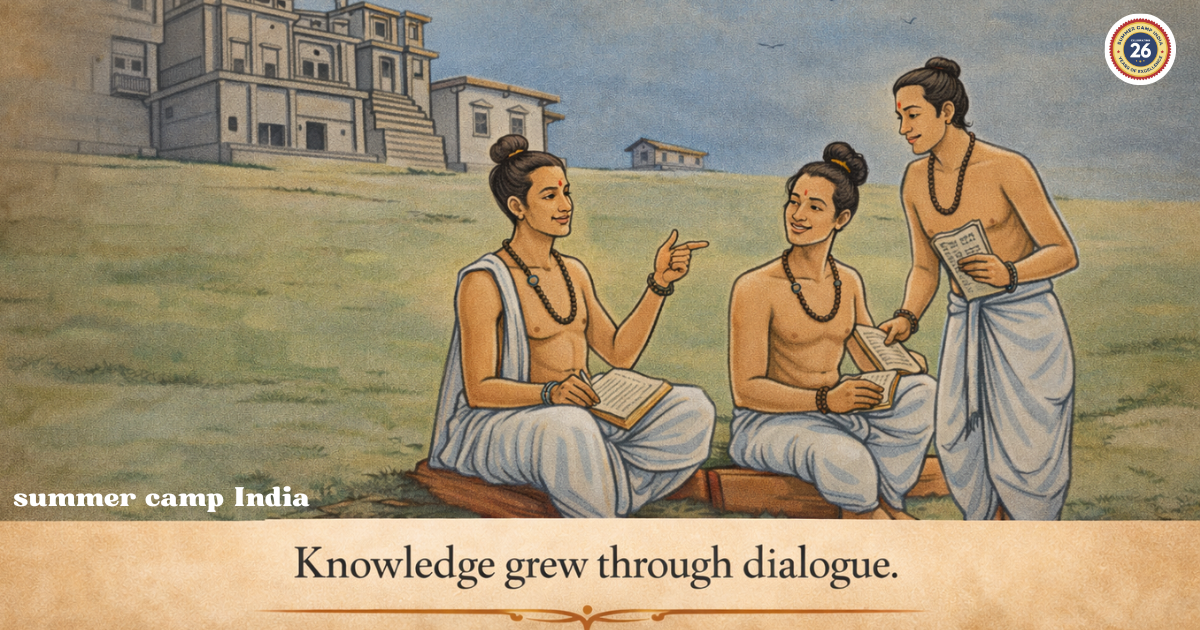
3. Debate and Discussion ⭐
Knowledge was tested through questioning, reasoning and dialogue.Understanding was measured by the ability to explain and defend ideas.
The student-teacher ratio was approximately 9:1, allowing personal guidance. Education, accommodation and food were provided free to scholars.
The Great Library – Dharmagunj
Nalanda housed a famous library complex called Dharmagunj (Treasury of Knowledge) consisting of three major buildings:
-
Ratnasagar
-
Ratnodadhi
-
Ratnaranjak
These stored thousands of manuscripts covering many branches of knowledge and were studied by scholars from different cultures.
Subjects & Areas of Study
-
Vedas and Vedangas
-
Grammar and Literature
-
Logic and Dialectics
-
Buddhist, Jain and Hindu philosophies
-
Medicine and Ayurveda
-
Mathematics
-
Astronomy
-
Fine Arts
Teachers & Scholars Associated
-
Nagarjuna
-
Shilabhadra
-
Dharmapala
-
Chandrapala
-
Gunamati
-
Sthiramati
-
Prabhamitra
-
Jnanchandra
Decline of Nalanda
In the late 12th century CE, the university was destroyed during invasions in the region.The library complex is recorded in historical accounts to have burned for a long period due to the large number of manuscripts stored there. This marked the end of one of the longest-running centres of higher learning in ancient India.
Educational Meaning
Nalanda demonstrated a principle: Understanding grows through dialogue. Students were not only expected to learn —they were expected to question. Knowledge advanced through discussion, not memorization.
Would you like the Article?
Share this Article to Social Media
Recent Blogs