7 months ago
2 minutes Read
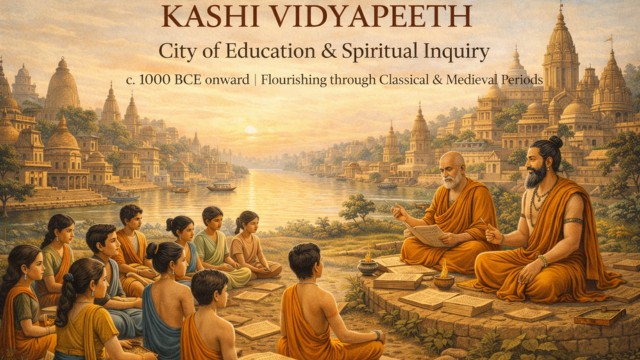
Kashi Vidyapeeth Ancient City of Knowledge & Philosophical Inquiry
c. 1000 BCE onward | Flourishing through Classical & Medieval Periods
Kashi, known today as Varanasi or Benaras, is among the world’s oldest continuously inhabited cities. Beyond its spiritual identity, Kashi has long been revered as a centre of scholarship, philosophical inquiry and intellectual tradition.
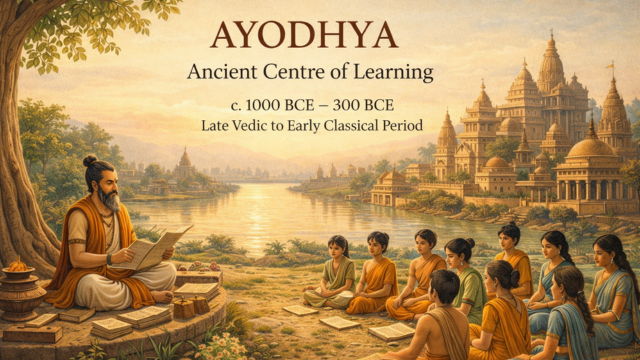
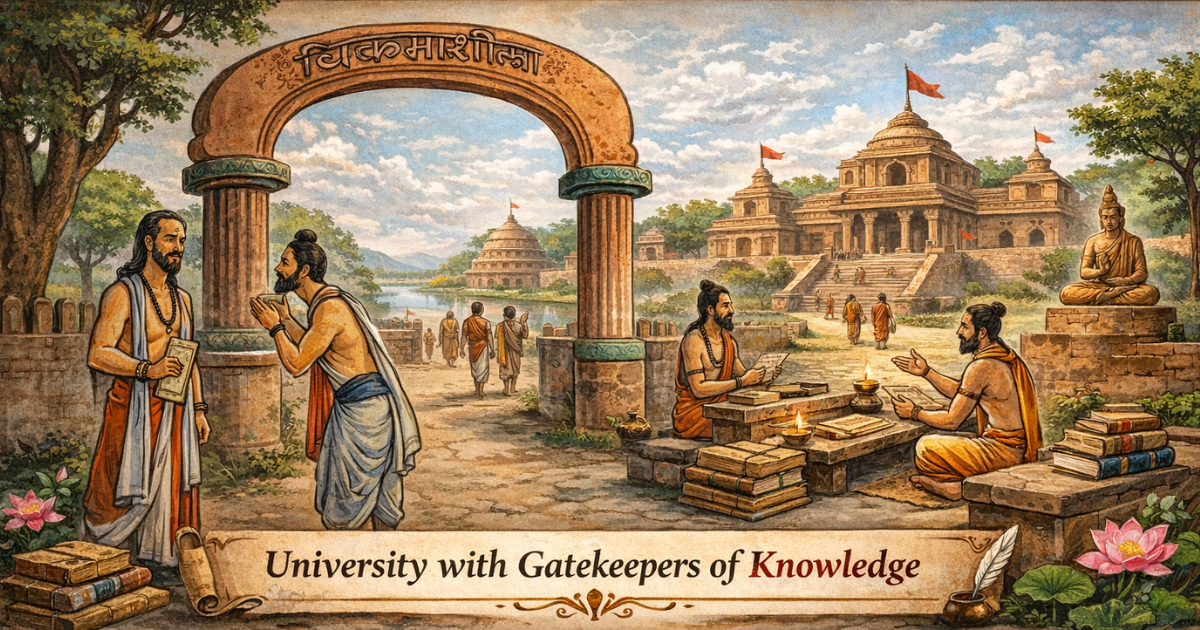
From approximately 1000 BCE onward, the region evolved into a vibrant hub of learning. Scholars, teachers and exponents of diverse disciplines settled in Kashi, transforming the city into a living academic ecosystem. Unlike centralized universities such as Nalanda or Vikramashila, Kashi’s educational system was decentralized. The residences of scholars themselves functioned as centres of learning.
This unique structure led to the collective recognition of the city as “Kashi Vidyapeeth” — not as a single institutional complex, but as an integrated scholarly culture distributed across the city.
Kashi is mentioned in various Puranic and classical texts as a seat of knowledge. Over time, it also flourished as a significant centre of Buddhist scholarship, particularly between the 7th and 12th centuries CE, alongside its continued Vedic and philosophical traditions.
Subjects & Disciplines
Traditional studies in Kashi included:
• The Four Vedas
• The Six Vedangas
• Itihasa and Puranic traditions
• Vyakarana (Grammar)
• Vedanta philosophy
• Alankara Shastra (Poetics & Literary Theory)
• Sankhya philosophy
• Logic and epistemology
• Ritual sciences
• Yogic and spiritual disciplines
Education emphasized interpretative scholarship, debate, memorization, commentary writing and disciplined intellectual engagement.
Teachers & Scholarly Traditions
Across centuries, numerous philosophical schools were represented in Kashi. Traditional accounts associate the region with scholars and philosophical lineages linked to names such as:
Kapila (Sankhya tradition)
Yaska (Nirukta tradition)
Gautama (Nyaya tradition)
Gargi and other learned women referenced in Vedic literature
While specific historical timelines vary, the city’s reputation as a scholarly centre remained consistent across periods.
Educational Character
Kashi’s educational model differed from structured campus universities. It was:
• Decentralized
• Scholar-centered
• Debate-driven
• Rooted in oral and textual transmission
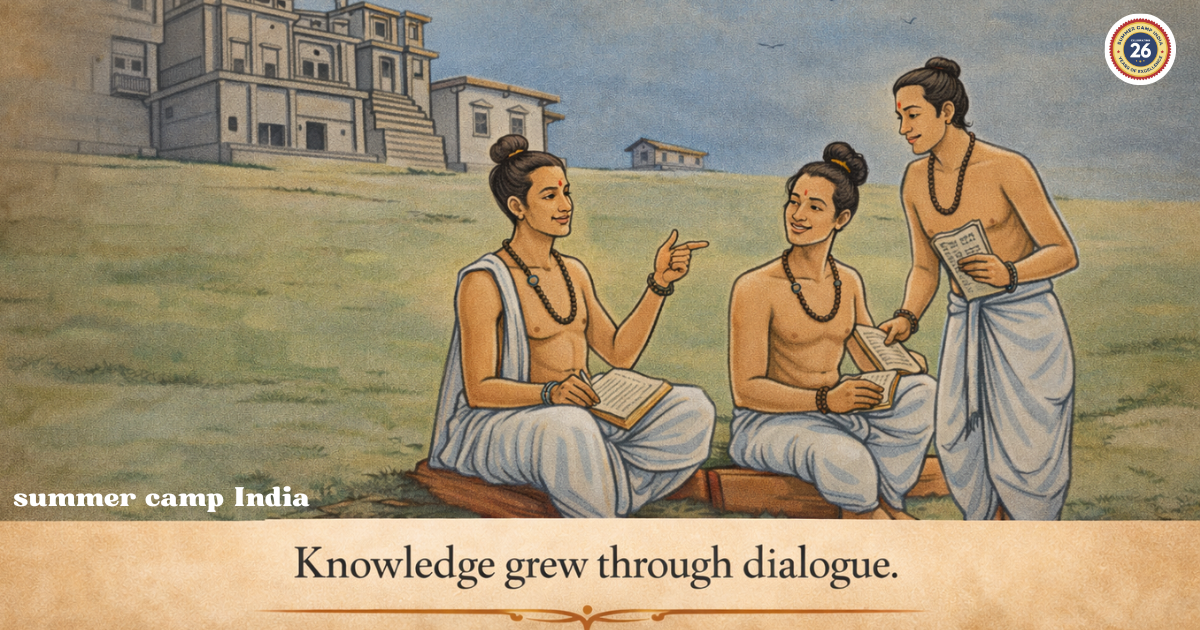
Learning occurred through discourse, interpretation, apprenticeship and disciplined daily routine.
The city itself functioned as a continuous classroom — a rare example of an urban knowledge civilization.
Would you like the Article?
Share this Article to Social Media
Recent Blogs