7 months ago
3 minutes Read
Valabhi University – India’s Ancient Scholar-Certifying University (6th–12th Century CE)
Long before modern universities began granting degrees and academic recognition, India had a unique institution that performed a similar role — Valabhi University. Active between the 6th and 12th centuries CE in present-day Gujarat, Valabhi was not only a centre of learning but also a place where scholars came to validate their knowledge. In many ways, it functioned like a modern research university and post-doctoral institute combined.
Located near the coastal trade routes of the Saurashtra region, Valabhi first grew as a prosperous commercial city. Its proximity to the sea trade attracted merchants from different parts of India and abroad. With prosperity came patronage of culture and education. The Maitraka dynasty rulers, along with wealthy traders, supported teachers, monasteries, libraries, and student residences. Over time, the trading town transformed into one of the most respected educational centres of ancient India.
A University That Produced Leaders
Valabhi was known not merely for teaching scriptures but for preparing individuals for real responsibilities. Students trained here were often appointed to high administrative and advisory positions in royal courts across Indian kingdoms. Kings trusted graduates of Valabhi because they possessed clarity of reasoning, balanced judgement, and practical understanding of governance.
Education at Valabhi therefore, meant more than learning — it meant credibility.
A Centre for Advanced Scholars
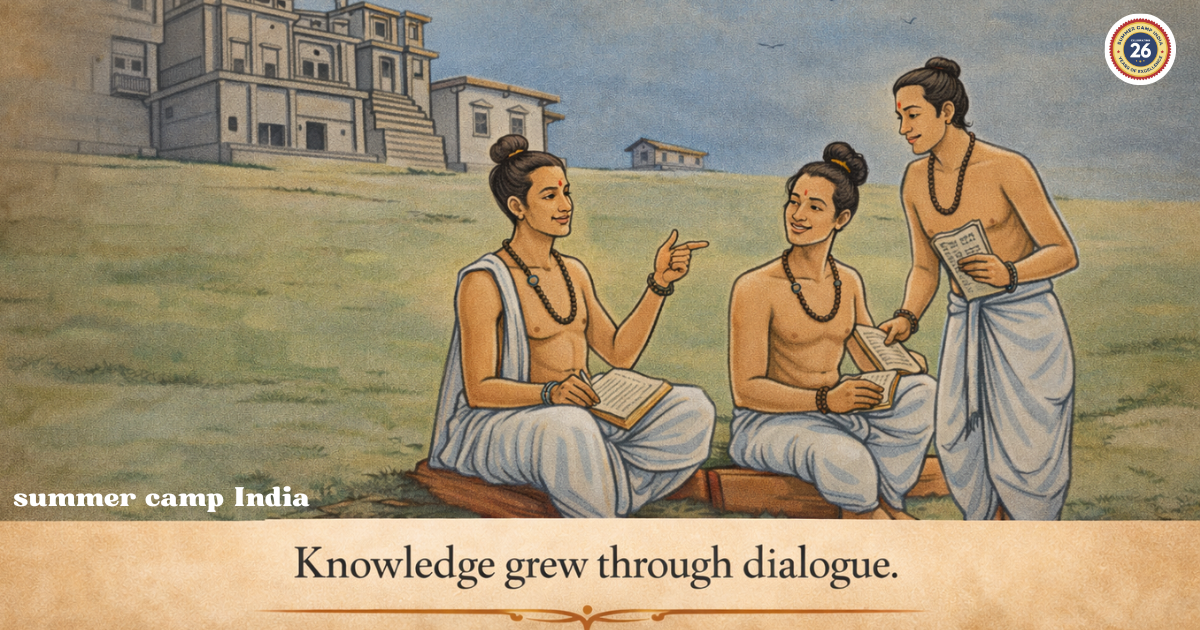
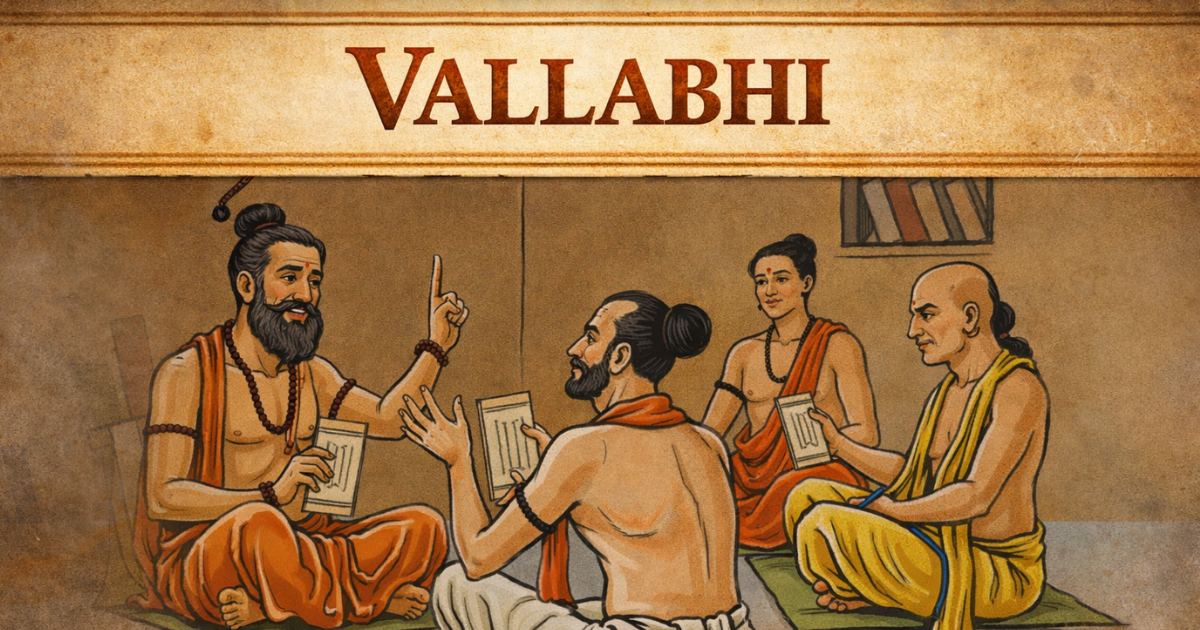
One of the most remarkable features of Valabhi University was its intellectual examination system. Established scholars from different regions travelled here after completing their primary education elsewhere. They stayed for three to four years, engaging in debates and philosophical discussions.
They examined what were called “possible and impossible doctrines” — testing ideas through logic and argument. A scholar’s reputation depended not on self-proclamation but on peer acceptance. Only when the learned community of Valabhi approved a thinker’s conclusions did the scholar earn recognition across the country.
In modern terms, this was similar to a peer-review process or post-doctoral evaluation.
Honour at the Gates
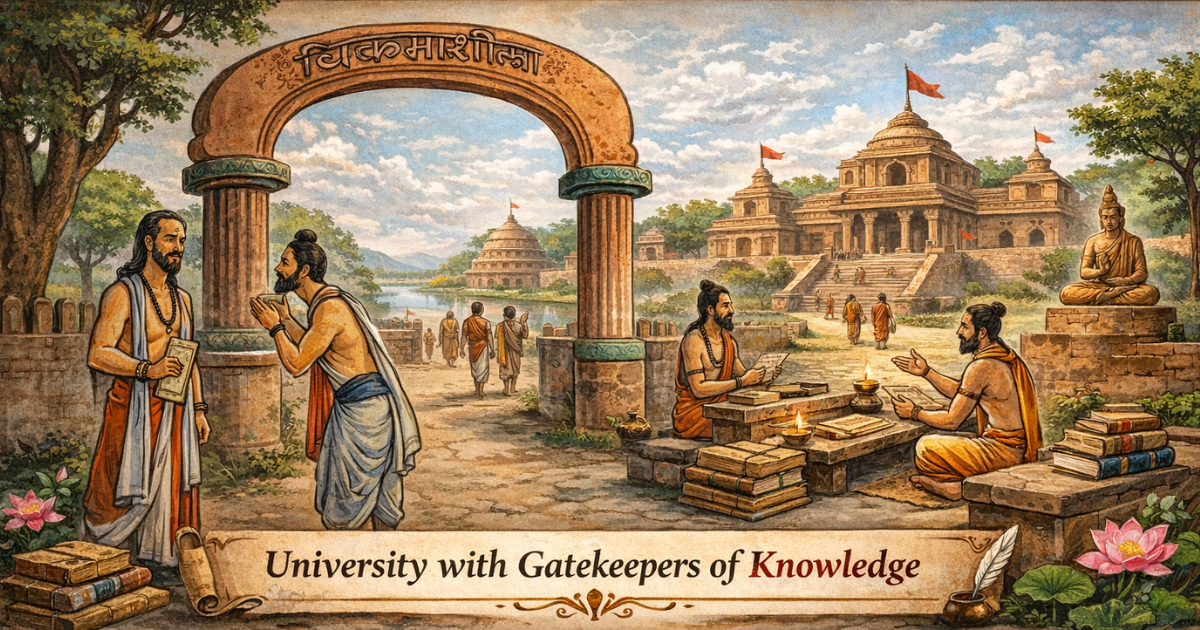
Recognition at Valabhi was publicly celebrated. The names of distinguished scholars were inscribed on the gates of the university. This acted as a certificate of intellectual authority. Being recorded there meant that leading thinkers of the era officially acknowledged the scholar’s wisdom.
Such a system ensured that knowledge remained authentic and verified.
Subjects Taught at Valabhi
Historical sources suggest that Valabhi offered diverse fields of study, including:
Philosophy and logic
Political science and administration
Economics and trade practices
Religion and ethics
Literature and language
Law and governance
The teaching method focused on discussion, questioning, and reasoning rather than memorisation. Students were encouraged to think critically and defend their ideas.
Decline and Legacy
Valabhi continued to flourish for nearly six centuries. However, around the 12th century CE, foreign invasions led to its destruction, and the institution eventually disappeared. Despite this, its intellectual influence survived in India’s scholarly traditions.
Today’s academic practices — research defence, peer review, and academic accreditation — closely resemble what Valabhi followed centuries ago.
Conclusion
Valabhi University was not just a place of education; it was a place where knowledge was tested and certified. It transformed a commercial city into a centre of wisdom and produced scholars who shaped governance and thought across regions.
Its legacy reminds us that the idea of validated learning and intellectual integrity existed in India long before modern universities emerged.
Summer Camp India follows the same philosophy as ancient Indian universities — learning through curiosity, activity, and exploration. We aim to make education enjoyable, practical, and confidence-building for every child.
Would you like the Article?
Share this Article to Social Media
Recent Blogs